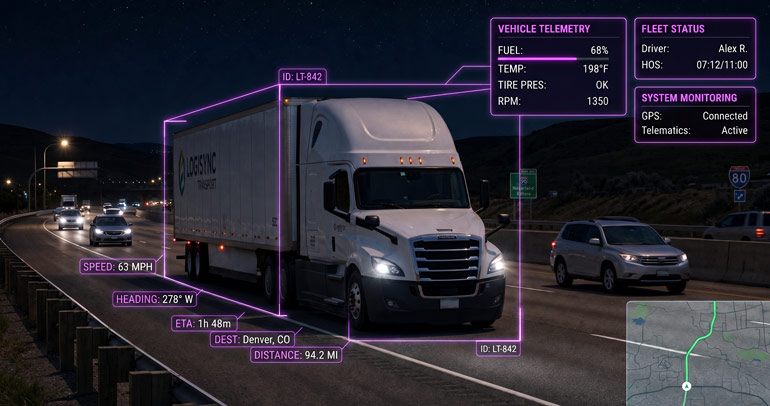
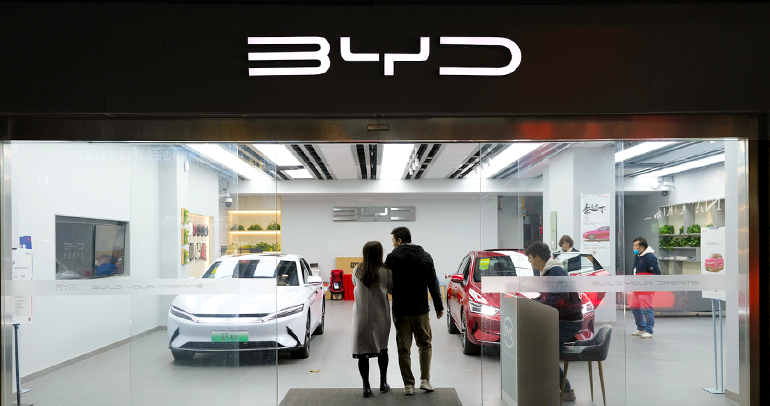
Through quantitative research and prototype testing, Escalent delivered actionable consumer-driven advisory to inform product innovation and commercialization strategy

Personalization. Autonomy. Connectivity. Electrification. As these evolving trends and realities continue to disrupt the automotive industry, companies large and small trust Escalent to transform their business with our automotive and mobility market research and intelligence, insights and consulting. We partner with forward-thinking auto brands around the world to develop human-centric products, services and technologies that delight buyers and keep them coming back to your brand for more.
Automotive & Mobility research and advisory expertise
Strategic research coverage
Global automotive brands tracked
New-car buyers assessed globally on vehicle electrification





Escalent is the leader in electrified powertrain, connected vehicle, commercial vehicle and fleet research and consulting. We know who the next electrified powertrain buyers are as well as who will be the future adopters of connected vehicle services and the connectivity features they desire. Our automotive market research, analysis and industry reports also inform how commercial vehicles and fleets must evolve. As tech titans battle energy giants to beat automakers in this rapidly evolving space, our automotive industry data, research services, advice and counsel help you win.








The automotive and mobility industry is being redefined in real time. Our global auto market experts integrate consumer insight, product and brand strategy, advanced car clinic testing, CX and market intelligence to uncover opportunities, shape vehicles and services people want, manage product complexity and strengthen go-to-market strategies. Translating constant disruption into clarity and decisive action, we help OEMs and and mobility providers around the world stand out and accelerate growth.
Show me moreAutomotive and mobility companies face relentless change and only actionable insights that cut through complexity drive results. Our auto and mobility experts work with our cross-disciplinary research teams—spanning quantitative, qualitative and secondary research, data analytics, behavioral science, online insight communities, cultural intelligence and creative activation—to illuminate what consumers truly want. Together, we shape transformative automotive strategies, products, experiences and brands that drive business impact and set the pace for the industry.
Show me moreIn an industry defined by complexity and ongoing transformation, our automotive and mobility consulting experts use responsibly governed, human-guided AI to work smarter and move faster without losing rigor. We thoughtfully apply AI across our research and insight workflows to accelerate data processing, trend identification and scenario testing—while expert oversight ensures quality, transparency and relevance. The result: trusted automotive insights and guidance that support smarter decisions across product development and innovation, brand strategy, and customer experience.
Show me moreDiscover how software-defined vehicles are reshaping the commercial vehicle and fleet industry and why understanding this transition is essential for OEMs and fleet businesses to improve efficiency, accelerate innovation and unlock greater value from connected vehicle data.
Discover how Chinese automotive brands are reshaping the competitive landscape in Europe and South America, and what legacy automakers can do to understand and mitigate the risk of customer defection.
Discover how a better understanding of consumer priorities can help automakers break down affordability barriers and increase EV consideration in a post-incentive market
The biggest strategic challenges facing the global automotive and mobility industry include balancing electrification investments as automakers shift focus to broader electrified powertrain portfolios; managing software-defined vehicle transformation and cyber risks; navigating geopolitical tensions, changing tariffs and supply chain instability; and keeping up with rapidly evolving consumer preferences that vary significantly across North America, Europe and Asia. Long-term planning for automakers is even more complex due to rising vehicle prices, fluctuating interest rates and economic uncertainty constantly impacting how and when consumers purchase vehicles.
At the same time, automakers are reshaping how they design, sell and monetize vehicles as connected vehicle platforms, AI-driven technologies, and commercial vehicle and fleet mobility solutions continue to evolve. Coupled with high global variability around EV demand, charging infrastructure and regulatory timelines, manufacturers and service providers are continuously recalibrating long-term product, investment and go-to-market strategies.
As competition intensifies in a high-risk environment where investment decisions are larger, faster and less forgiving, market research and consumer insights are critical to reduce uncertainty, prioritize opportunities and guide decisions around electrification roadmaps, connected vehicle services and future mobility ecosystems. Automakers, tier one suppliers and automotive industry stakeholders increasingly rely on insights to understand vehicle purchase decisions, emerging technology adoption and evolving customer expectations across both retail automotive and commercial vehicle markets.
The rise of Chinese automakers is fundamentally reshaping global automotive competition by accelerating innovation cycles, increasing pricing pressure, and redefining consumer expectations around in-vehicle technology and vehicle value. Chinese OEMs are expanding rapidly beyond China while introducing a new operating model that blends automotive manufacturing with the speed, agility and iteration cycles of technology companies. These Chinese automakers are accelerating vehicle development timelines, embracing software-defined architectures and bringing new vehicle models to market at a pace that traditional automakers often struggle to match. Their ability to quickly iterate, learn from market feedback and continuously refine vehicle offerings is changing consumer expectations around innovation, features and overall vehicle value.
As a result, Chinese OEM expansion is intensifying competition across Europe and other global markets where established automakers must defend share while adapting to new pricing pressures and vehicle feature benchmarks. Regional policies, trade dynamics and localization strategies further complicate how and where automakers compete. For legacy OEMs, the challenge is both competitive and strategic: they must balance global scale with regional responsiveness while evolving product development, software capabilities, pricing and go-to-market strategies to keep pace with faster-moving competitors.
Market research and insights play a critical role in helping automakers understand how consumers perceive emerging Chinese vehicle brands as well as what drives consideration, trust and purchase intent. These insights help automakers identify competitive vulnerabilities, uncover differentiation opportunities, and prioritize investments across product, brand strategy and customer experience. In an increasingly crowded and fast-moving global market, the ability to translate market signals into decisive action is becoming a key competitive advantage for automakers.
Customer expectations are one of the primary forces shaping automakers’ EV adoption and electrified powertrain strategies across both the retail automotive market and the commercial vehicle and fleet sector. While interest in different electrified powertrains varies, many mainstream vehicle buyers (be they individual consumers or businesses purchasing commercial vehicles) evaluate EVs through practical considerations such as cost, charging convenience, driving range, long-term reliability and how well a vehicle fits their lifestyle or operational needs.
As a result, auto manufacturers are increasingly recognizing that customers are not looking for a one-size-fits-all electrification strategy. Instead, customers are seeking powertrain choices that align with factors such as driving patterns, infrastructure access, operating costs and performance requirements.
Consequently, the market is evolving from a singular focus on full electrification toward a broader electrified powertrain portfolio approach. Rather than focusing exclusively on battery electric vehicles (BEVs), automakers are increasingly adopting a multi-powertrain strategy that includes hybrids (HEVs), plug-in hybrids (PHEVs), and extended-range electric vehicles (EREVs) to provide greater flexibility and meet varying customer needs.
This shift reflects growing consumer demand for vehicle optionality and practical use-case alignment rather than a single universal powertrain solution. Understanding how different consumer and fleet business segments perceive and consider electrified powertrains helps automakers refine product development, pricing strategies and messaging as the market transitions from early adopters to broader mainstream buyers.
Connected vehicle technologies are becoming a major competitive differentiator for automakers as consumers increasingly evaluate vehicles based on digital features and software capabilities (such as over-the-air software updates, advanced driver assistance systems and integrated digital services) that are transforming vehicles into continuously evolving technology platforms. However, the auto industry is still working to close a critical gap: while connected vehicle capabilities are expanding, many services struggle to achieve meaningful consumer adoption or willingness to pay.
For automakers, vehicle connectivity creates new opportunities to extend the customer relationship beyond the initial vehicle purchase. Digital services, remote diagnostics and predictive maintenance tools allow automakers to deliver ongoing value throughout the vehicle lifecycle. Connected vehicles also generate significant volumes of underlying vehicle and driver data, creating new opportunities for personalization, service optimization and data-driven revenue models. Successfully monetizing connected vehicle services requires automakers to deliver clear, relevant, differentiated value that customers are willing to pay for rather than simply adding more digital features.
At the same time, automakers must carefully balance monetization opportunities with growing concerns around customer privacy, data transparency and data ownership. As connected vehicles become more software-driven and data-rich, regulators and consumers are placing greater scrutiny on how vehicle data is collected, shared, stored and monetized. Regulatory frameworks such as GDPR in Europe are already shaping expectations around consent and data governance, while requirements in other markets continue to evolve. For automakers, maintaining consumer trust and demonstrating responsible vehicle data practices are becoming essential components of successful connected vehicle strategies.
Market research and customer insights help automakers understand which connected vehicle features consumers value most, how connected vehicle services should be packaged, and when and how these services should be introduced across the ownership journey. Insights into consumer preferences, needs, barriers, and decision drivers help automakers prioritize technology investments and design connected vehicle offerings that deliver value, strengthen brand differentiation and build long-term customer trust.
Artificial intelligence is becoming a foundational technology shaping both automotive industry decision-making and the future evolution of vehicles and mobility services. AI is increasingly influencing how automotive and mobility companies analyze consumer behavior, market trends and emerging mobility technologies, but its impact goes far beyond analytics.
AI holds the promise of fundamentally transforming the vehicle itself from a machine into an intelligent, adaptive platform that enables greater personalization, enhanced safety, improved efficiency and more seamless, in-vehicle transactions. Automakers are building software and AI into vehicles in order to create more responsive, individualized customer experiences based on real-world usage patterns and driver behavior. This shift is also laying the foundation for more connected ecosystems where connected vehicles interact with drivers and riders, other vehicles, infrastructure and the energy grid—accelerating the path toward fully integrated vehicle to everything (V2X) mobility.
At the same time, AI is helping organizations process large volumes of data—from vehicle usage patterns to customer feedback—to identify patterns that inform product development and service design. AI-powered analytics are helping automotive companies accelerate insight generation, identify emerging trends and make faster strategic decisions in an increasingly complex market environment.
However, AI alone cannot fully capture the complexity of human decision-making because consumers evaluate vehicles through a mix of emotional, practical and financial considerations that require human interpretation. As a result, leading automotive and mobility companies are combining AI-driven analytics with behavioral science and human expertise to better understand customer expectations, technology adoption and willingness to pay for future mobility services. This hybrid approach helps automotive and mobility leaders translate complex data into smarter decisions about product strategy, customer experience and future mobility offerings.
Commercial vehicles and fleet businesses continue to play a critical role in advancing powertrain, connectivity, autonomy and efficiency innovation across the automotive and mobility industry. Commercial vehicles and fleets have traditionally been a major catalyst for innovation across the mobility sector, often leading the adoption of new powertrains, connected vehicle technologies and efficiency-driven solutions due to their high utilization and cost sensitivity. From delivery companies and logistics providers to corporate fleets, fleet business decision-makers closely track fuel costs, maintenance expenses and total cost of ownership, making them natural adopters of solutions that improve operational performance.
However, that leadership position is now less defined because while electrified powertrains and advanced fleet technologies offer long-term potential, many commercial vehicle and fleet businesses are pausing or slowing large-scale investments amid uncertainty around regulation, infrastructure, margins and evolving technology standards. This uncertainty is creating a fragmented innovation environment where many commercial vehicle and fleet stakeholders are waiting for clearer market direction before scaling investments. At the same time, emerging areas (such as autonomous vehicle capabilities) present a significant opportunity for fleets to reclaim a leadership role, particularly as commercial vehicle use cases may accelerate adoption faster than in the consumer market.
This creates both a challenge and a significant opportunity for the commercial vehicle and fleet sector. Vehicle manufacturers and service providers that can confidently navigate these uncertainties have the chance to reestablish competitive advantage by advancing commercial vehicle and fleet solutions across electrification, vehicle connectivity, autonomy, fleet management and energy optimization. Fleet businesses also provide valuable real-world environments for testing, refining and scaling emerging mobility technologies before broader deployment across the market.
Market research and strategic insights are increasingly important for helping commercial vehicle manufacturers, fleet operators and service providers identify where innovation opportunities exist and how to prioritize investments. In a market waiting for direction, insights and strategic clarity are critical to unlocking innovation and accelerating adoption across the commercial vehicle and fleet business ecosystem.
New findings from Escalent’s EVForward study reveal new-car buyers are weighing monthly payments, total cost of ownership, battery replacement risk and home charging costs when deciding if a BEV feels affordable.
Learn why fleet businesses are taking a more cautious approach to technology adoption, and how behavioral science reveals what will reignite adoption based on data-driven insights from our Fleet Advisory Hub study.
Telematics falls short of expectations for more than half of fleet operators, as new findings from our Fleet Advisory Hub report reveals gaps between promised outcomes and real-world connected solutions performance.