September 1, 2026
EXECUTIVE SUMMARY
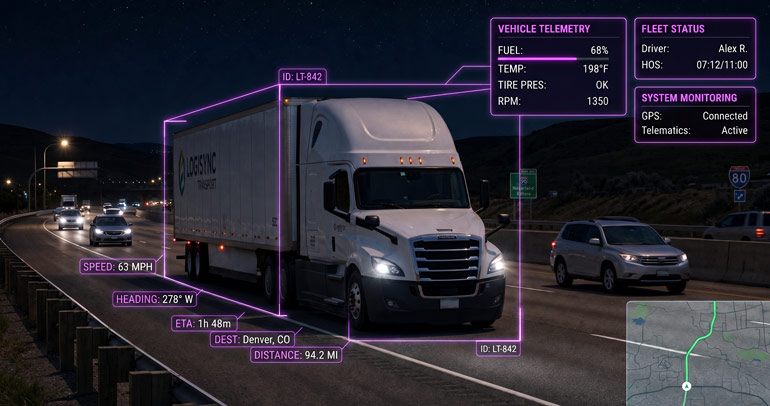
This article explores how software-defined vehicles (SDVs) are reshaping the commercial vehicle and fleet industry, creating new opportunities for original equipment manufacturers (OEMs) and fleet businesses to improve efficiency, accelerate innovation and unlock greater value from connected vehicle data. The article examines the key opportunities and challenges associated with the transition and outlines strategic priorities for organizations preparing for a more software-driven future.
Traditionally, the day a truck rolled off the assembly line was the day its technology was set. The truck might receive routine maintenance, replacement parts or occasional recalls, but meaningful improvements typically arrived only with the next model year update or, sometimes, after several years.
That is beginning to change.
In a June 2025 survey by Capgemini of 600 executives from 200 automotive organizations across OEMs, suppliers and mobility providers in North America, Europe and the Asian-Pacific region (APAC), 87% of organizations said “software will be one of the biggest sources of competitive advantage over the next five years.” This signals a decisive shift toward software-defined mobility.
Reflecting this momentum, industry estimates suggest that the global software-defined commercial vehicle market could reach approximately $45 billion by 2032. With software-defined vehicles, trucks—specifically, commercial vehicles spanning Class 2B to Class 8, which are the focus of this article—will evolve into software-enabled platforms capable of receiving new features, diagnostics and performance enhancements throughout their lifecycle.
A Complete Architectural Transformation of Traditional Commercial Vehicles
At the heart of SDVs is a fundamental shift in the vehicles’ electrical/electronic (E/E) architecture—the network of electronic systems, controllers, wiring and software that enables a vehicle to operate.
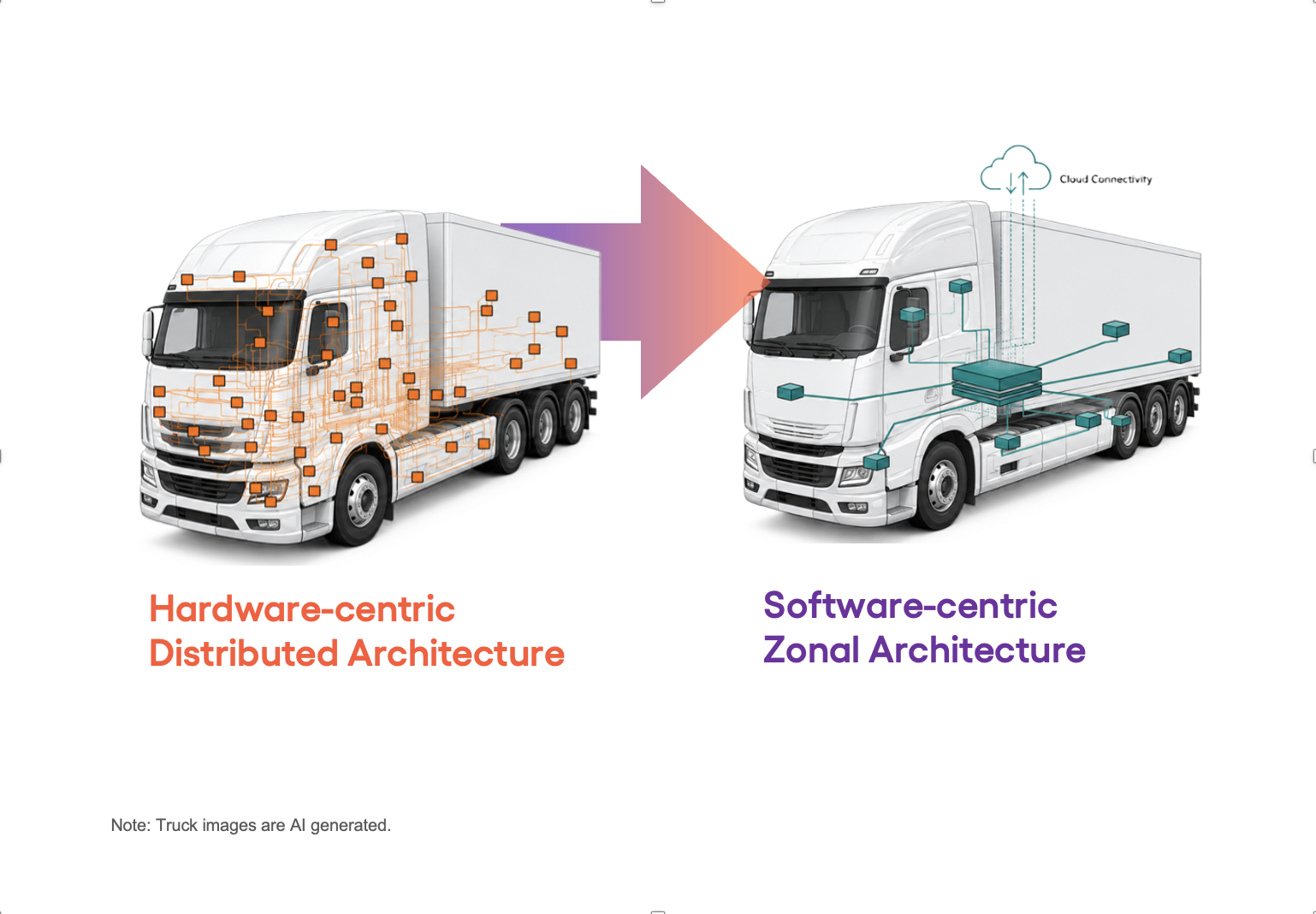
For decades, trucks have relied on a distributed E/E architecture where individual electronic control units (ECUs) controlled specific functions such as the powertrain, braking, steering, lighting and body controls. As modern technologies and regulatory requirements emerged, OEMs typically added more ECUs to support their vehicles. This gradually increased hardware complexity, wiring and software integration challenges.
To support connected, electric and increasingly autonomous vehicles, the industry is moving toward centralized and domain-based E/E architecture. Here, high-performance computing platforms manage multiple vehicle functions while software becomes the primary enabler of new features, updates and vehicle intelligence. This architectural shift forms the foundation of SDVs.
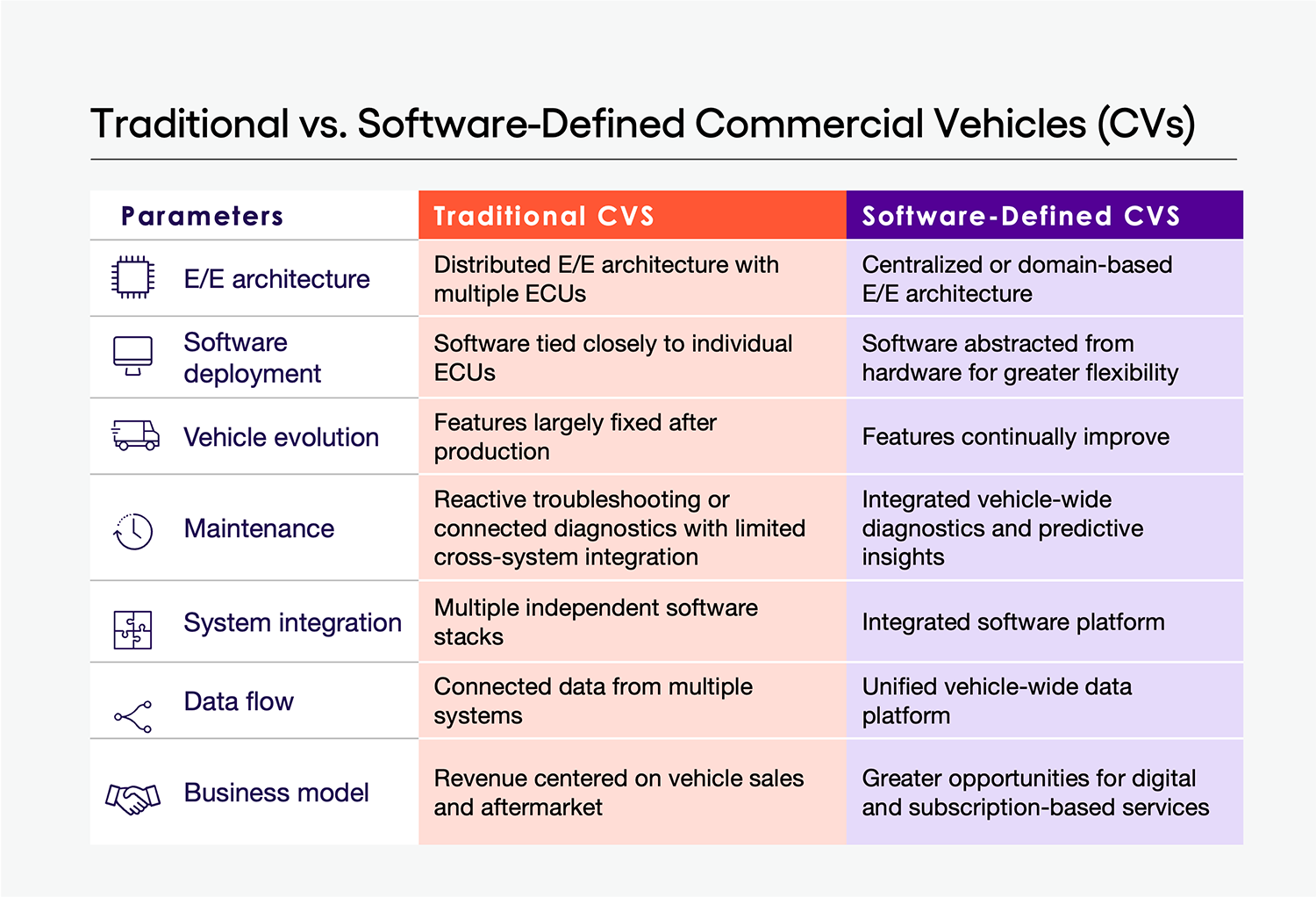
The table below highlights how software-defined commercial vehicles differ from traditional ones.
Software-Defined Commercial Vehicle Opportunities, Challenges and Strategic Recommendations for OEMs
OEM Opportunities
For OEMs, SDVs are more than a technology upgrade. SDVs represent a shift in how vehicles are designed, built and monetized.
- Cost optimization: By replacing multiple ECUs with zonal E/E architecture and centralized computing, SDVs reduce hardware complexity. By minimizing cabling requirements and reducing wiring harness weight by up to 50%, these architectures decrease commercial vehicle weight, improve efficiency and support more streamlined power and data distribution. This also allows OEMs to reuse software across models.
- Faster innovation and continual upgrades: New features no longer must wait for the next model launch. If the underlying hardware has the necessary capabilities, over-the-air (OTA) updates enable OEMs to continually enhance commercial vehicles, deploy regulatory updates and reduce service and recall costs.
- New revenue streams: OEMs can complement vehicle sales and aftermarket services with new revenue streams from features-on-demand, such as performance and efficiency modes, advanced safety/advanced driver-assistance (ADAS) packages and other configurable functions that are activated or upgraded via software rather than hardware changes. OEMs can also earn recurring subscription income from connected commercial vehicle services such as remote diagnostics, predictive maintenance, fleet optimization and app‑based business tools integrated into the truck.
- Data as a competitive advantage: Connected commercial vehicles generate valuable operational data that help OEMs improve products, strengthen warranty management, develop targeted services and build new data-driven business models. According to Warranty Week, leading OEMs such as Ford, GM and Tesla together paid over $11.7 billion in warranty claims in 2024, which highlights how earlier detection of systemic problems can become valuable.
OEM Challenges
- Modernizing legacy vehicle architectures: Most OEMs are transitioning to SDVs while continuing to support existing vehicle platforms. Integrating new software-defined architectures with legacy systems can increase development complexity, timelines and costs.
- Building the right technology ecosystem: Delivering SDVs requires expertise across software, cloud, connectivity and data platforms. OEMs must decide which capabilities to build in-house and where strategic partnerships can accelerate innovation to remain competitive in the SDV era. For instance, in March 2026, Volvo Group outsourced the development of its next‑generation tractor–trailer connector to Tectran Manufacturing, which will enable high‑speed wireless data communication between the truck and trailer.
- Unlocking value from connected commercial vehicle data: Connected trucks generate vast amounts of data, but the challenge lies in governing and securing that data while converting it into actionable insights, digital services and new revenue opportunities.
Forward-Looking Strategy Recommendations for OEMs
- Pursuing strategic partnerships: A 2024 global SDV readiness survey by Deloitte of executives from 160 OEMs across Europe, the US, Japan and South Korea highlighted the value of strategic partnerships: OEMs collaborating with technology companies reported 16% lower SDV-related research and development spending than those without partnerships, and gained access to advanced technologies and specialized expertise.OEMs should pursue strategic partnerships that enable shared development and access to specialized expertise as these collaborations can reduce costs and accelerate innovation. One example is when, in June 2025, Volvo Group and Daimler Truck launched Coretura, a joint venture to develop a common software-defined vehicle platform for commercial vehicles while enabling each OEM to deliver differentiated digital applications and services.
- Leveraging legacy OEM strengths: Legacy commercial vehicle OEMs are at a disadvantage to new SDV entrants because legacy OEMs’ products, processes and culture are still built around fixed hardware and slow change. Legacy OEMs should respond by using their strong real‑world knowledge of fleets, duty cycles and telematics performance to pick specific, high‑value functions that generate real value for customers and systematically rebuild these high-value functions into features and services within their new SDV platforms.This is supported by Escalent’s Fleet Advisory Hub™ insight program findings from our recent The Next Generation of Telematics Growth study, which revealed nearly nine in ten fleet decision-makers (89%) say it’s important to have a single platform to manage telematics data across all business vehicles. The real opportunity lies in how effectively telematics providers can help fleets integrate telematics data with broader business systems and translate insights into coordinated, day-to-day action that improves fleet business performance, as further discussed in this blog. It will become increasingly essential for providers to connect telematics solutions, software-defined vehicle platforms and business operations into integrated, flexible ecosystems that align with diverse fleet business needs and enable coordinated, data-driven decision-making. This presents legacy commercial vehicle OEMs with a distinct way to differentiate their offerings in the market.
"Our research shows that fleets increasingly value integration over isolated capabilities. The opportunity for OEMs is to connect vehicle intelligence, telematics and business systems in ways that translate data into coordinated action."
Vani Punj
Analyst, Automotive & Mobility
Software-Defined Commercial Vehicle Opportunities, Challenges and Strategic Recommendations for Fleets
Fleet Opportunities
Our Fleet Advisory Hub™ 2026 Fleet Technology Index 7.0 study found that, among a sample of 1,004 fleet decision-makers, 13% of fleets are early tech adopters and return on investment (ROI) remains the key criterion for prioritizing any new technology. As fleet operators seek innovations that deliver measurable business value, SDVs are emerging as a compelling solution that can help fleet operators maximize vehicle uptime, improve operational efficiency and reduce total cost of ownership throughout the vehicle lifecycle.
- Higher uptime and fleet availability: With predictive maintenance and remote diagnostics, potential issues can be detected before they lead to roadside breakdowns. This helps fleets plan maintenance proactively, reduce unplanned downtime and keep vehicles on the road longer.
- Better operational intelligence: Connected trucks provide fleet managers with real-time visibility into vehicle health, maintenance status and performance trends across the fleet. By consolidating data from multiple vehicles, fleets can optimize maintenance schedules, improve asset utilization, identify recurring issues and make more informed operational decisions that enhance overall fleet efficiency and productivity.
- Fleet standardization across mixed vehicle ages: SDVs allow an entire fleet—from vehicles bought years ago to those bought yesterday—to be brought to the same software baseline remotely, reducing the complexity of managing a fleet with varying vehicle ages and software versions.
"For fleets, the case for software-defined vehicles ultimately comes down to measurable business value. Technologies that improve uptime, efficiency and total cost of ownership will be best positioned to earn fleet investment."
Paritosh Gupta
Project Manager, Automotive & Mobility
Fleet Challenges
- Strengthening cybersecurity readiness: As fleets increase their adoption of connected and software-defined commercial vehicles, cybersecurity becomes essential to protecting operational data, ensuring business continuity and maintaining reliable fleet operations. Fewer than 20% of fleet decision-makers strongly agree their company is well-prepared to “protect or prevent a data breach or cybersecurity incident from happening” or “remediate or fix the situation in case of a data breach or cybersecurity incident,” according to our Fleet Advisory Hub’s The Next Generation of Telematics Growth study. Given the potential fleet-wide impact of cyber incidents, establishing robust governance and partnering with trusted technology providers can help fleets manage risks effectively.
"As commercial vehicles become more software-defined and connected, cybersecurity readiness becomes an operational requirement. Fleets that strengthen governance and work with trusted technology providers will be better positioned to manage this transition."
Vani Punj
Analyst, Automotive & Mobility
- Preparing the workforce: Software-driven diagnostics, remote updates and digital tools require new skills. Upskilling technicians and fleet managers will be essential for successful SDV adoption.
- Developing a clear data strategy: Fleet operators should focus on actionable insights that improve uptime, maintenance planning, fuel efficiency and asset utilization rather than collecting data without a clear purpose.
A Forward-Looking Strategy Recommendation for Fleets
Digital readiness: While SDV adoption is still evolving, fleet operators should recognize that managing software-centric commercial vehicles will require new capabilities in cybersecurity, data management and digital vehicle maintenance. Developing the necessary governance, tools and workforce skills over time can help fleets prepare for future SDV integration and operate connected vehicles securely and effectively as adoption scales.
Key Takeaways
- The transition to software-defined commercial vehicles is expected to be one of the most significant shifts the commercial vehicle and fleet industry has seen in decades.
- For OEMs, it creates opportunities to simplify architecture, accelerate innovation and build recurring revenue streams.
- For fleet operators, it promises lower operating costs, better operational visibility and commercial vehicles that continue to improve long after their purchase.
- The organizations that succeed in the SDV era will be those that look beyond software as a feature and recognize it as the foundation of the next generation of commercial vehicles.
As the industry navigates this transition, Escalent equips clients with the insights and market intelligence needed to succeed through custom research, competitive intelligence, market monitoring and advisory services, helping clients shape strategy, anticipate market shifts and make informed decisions with confidence. If you’d like to learn more about how we can support your business needs, please contact us using the form below.
About Escalent’s Fleet Advisory Hub™
The results reported come from Escalent’s Fleet Advisory Hub 2026 Fleet Technology Index 7.0 and 2025 The Next Generation of Telematics Growth reports. These results comprise a subset of commercial vehicle and fleet decision-makers drawn from the Fleet Advisory Hub audience. Participants were recruited from an opt-in online panel of fleet business decision-makers and interviewed online. Escalent will supply the exact wording of any survey question upon request.

Paritosh Gupta
Project Manager, Automotive & Mobility
Paritosh Gupta is a Project Manager in Escalent’s Automotive & Mobility practice. With over a decade in the automotive industry, Paritosh delivers data-driven insights for diverse automotive clients worldwide. Specializing in secondary research and forecasting techniques, he spearheads project delivery at Escalent, focusing on forecasting, market landscaping, and competitor benchmarking.

Vani Punj
Analyst
Vani Punj is an Analyst in Escalent’s Automotive & Mobility practice. She has three years of experience in the market research industry and brings a strong academic background in Economics. Vani has contributed to cross-industry projects with a primary focus on secondary research, competitive analysis, and market insights. In her current role, she supports key initiatives in market forecasting, market landscaping, and tracking trends and developments within the commercial vehicle and fleet industry at Escalent. Her work contributes to building a comprehensive understanding of industry dynamics and supporting data-driven decision-making for our clients.