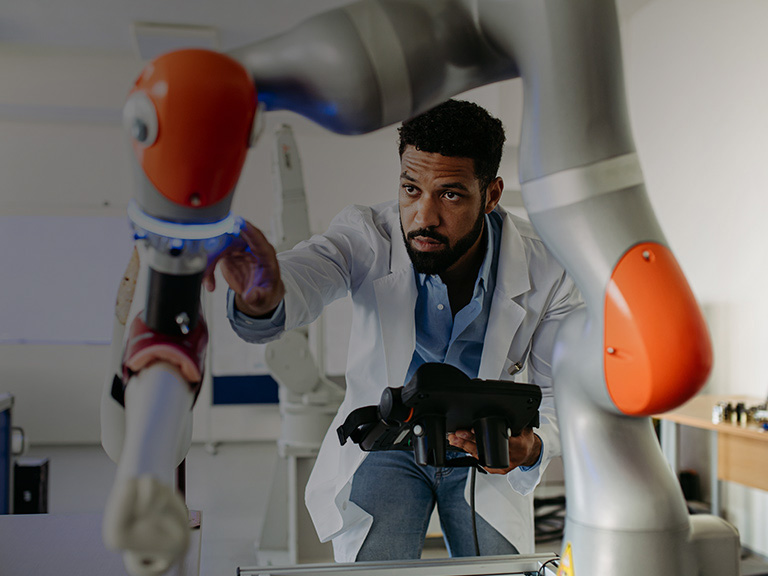
Human Motion Intelligence helps you train smarter robots using real-world human motion data—captured, validated and structured for AI at scale. Built on Escalent’s research expertise, it transforms observable human behavior into high-fidelity training datasets for robotics and embodied AI. The result: more accurate models, faster deployment and systems that perform reliably in real environments, not just controlled or simulated ones.
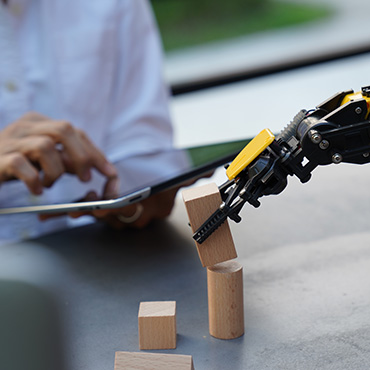
Robotics teams don’t struggle with ambition; they struggle with high-quality human motion data that actually reflects how people move in the real world. Simulated inputs fall short, and inconsistent datasets slow training, limit performance and create risk at deployment. Human Motion Intelligence is designed to solve that gap through research-driven human motion data collection and dataset development.
Escalent combines behavioral science rigor with AI-enabled data collection and annotation workflows to capture, validate and structure human motion data at scale. We recruit the right participants, define task-based human motion scenarios aligned with your industry and use cases, and guide structured data capture across environments. Then we apply validation frameworks and data annotation processes to ensure every dataset is consistent, accurate and usable for machine learning. The result is AI-ready human motion datasets that integrate seamlessly into robotics training pipelines—so your models learn from reality, not assumptions, and perform with confidence in the field.
When robots fail, it’s rarely because of the algorithm—it’s because the training data didn’t reflect the complexity of real life. Human Motion Intelligence helps you close that gap by designing datasets around how people behave across contexts, industries and environments.
Using a research-driven, end-to-end process, Escalent ensures every data point is intentional. From precision sampling and task design to participant training, data validation and structured annotation, we create datasets that are diverse, repeatable and deployment ready. AI-enhanced workflows accelerate data processing without sacrificing quality, while human oversight ensures accuracy and relevance. The outcome is more than better data—it’s faster training cycles, improved model performance and robotics systems that adapt, respond and operate effectively in the environments they’re built for.
Ask how Human Motion Intelligence turns real human behavior into scalable, AI-ready training data for robotics.
Human motion data for robotics refers to real-world recordings of how people move, interact with objects
and perform tasks. These data are used to train humanoid robots and embodied AI systems to replicate
human-like actions and operate effectively in real environments.
Real-world human motion data captures the variability and complexity of actual human behavior. Unlike
simulated data, it enables AI models to learn from realistic scenarios, improving accuracy, adaptability,
and performance in real-world conditions.
We use a proprietary, research-driven process that includes participant recruitment, task design aligned to
real-world use cases, and structured data capture across environments. This ensures the data reflect how
people perform tasks in different contexts.
Our approach goes beyond basic data collection. We design datasets using research methodologies,
apply validation frameworks, and deliver structured, annotated datasets that are ready for humanoid
robotics and embodied AI training—ensuring consistency, accuracy and usability.
Yes. We design task-based data collection programs tailored to your industry, workflows, and use cases,
ensuring the datasets are relevant and effective for your specific robotics or AI applications.
We combine research-grade validation, structured annotation and rigorous quality controls with dedicated
human oversight. Our call center proactively supports participants, resolves issues in real time and
verifies equipment, task execution and video quality to ensure consistently high-quality motion data for
humanoid robotics training.