June 25, 2026

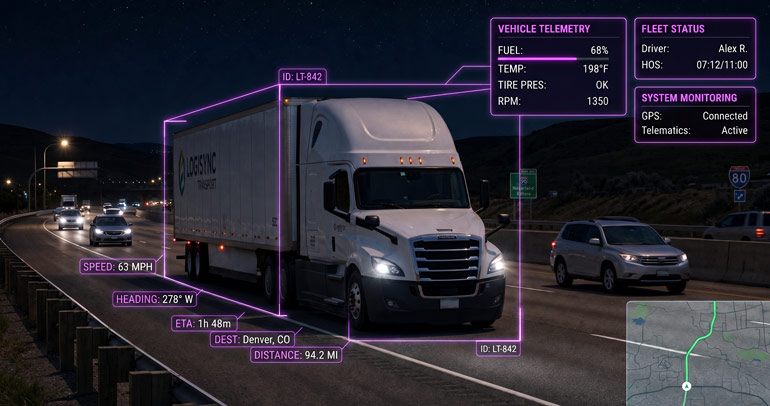
Editor’s note: Based on in-the-field conversations with fleet decision-makers, operators and drivers, Gregory Skinner leads Escalent’s Fleet Foresight presentations, which are part of and complement Escalent’s Fleet Advisory Hub syndicated research program. This blog, based on a recent presentation, explores how fleet telematics adoption is driven less by technological ambition and more by operational disruption.
The operational realities fleet decision-makers are trying to solve every day are the catalyst to change for the business.
A truck goes missing. Equipment gets stolen. A camera fails during a critical incident.
But it’s what happens next where the real telematics story begins.
Why Does Fleet Telematics Adoption Start Reactively Instead of Strategically?
Typically, it’s a notable event, catastrophic even, that kicks off a fleet manager’s investigation into telematics.
During a conversation, one fleet manager told me about how he newly arrived on the job only to discover that a truck in the fleet had been “missing” for nearly two years. Dropped off at a dealership for maintenance, the truck effectively disappeared because it had no tracking and no one had been notified to pick it up. It wasn’t until the fleet manager literally drove from dealer to dealer that he found it in a back lot. At that moment, the decision to invest into telematics was an easy decision for him.
Anecdotes such as this one come up repeatedly in my conversations with fleet decision-makers, with telematics consideration and adoption starting only after a costly operational blind spot exposes risk, inefficiency and/or vulnerability.
The Fleet Telematics Complexity Gap: Why Fleet Managers Struggle to Operationalize Data
One of the most surprising things is just how unstructured the telematics shopping process often is, especially for newer fleet operators.
Google searches, ChatGPT queries and LinkedIn outreach, not product demos or sales calls, are the norm. It’s shockingly common to hear how fleet managers are deeply unsure of what differentiates one telematics provider from another, yet they hedge on the idea that their provider of choice will give the manager everything they need for their fleet business. This is often before the fleet manager has any true sense of what they actually need for their business. The only way for them to know that is through real-world telematics usage.
What I see is that as fleet manager familiarity with telematics increases, so does the gap between their (new) system’s capabilities and the telematics features that are actually critical to their daily fleet operations. This growing complexity gap is not just anecdotal. It reflects a broader industry trend where fleet telematics adoption is high but operational impact remains inconsistent, as explored in our recent Fleet Advisory Hub research findings on the next generation of telematics growth.
How Are Fleet Businesses Using Telematics Beyond Vehicle Tracking?
What stood out most during my conversations were not examples typically touted as telematics strengths, but rather, the unexpected and fringe use cases.
All day long, we in the industry hear fleets use telematics for:
- Vehicle tracking
- Preventative maintenance scheduling
- Driver monitoring
- Route optimization
But we don’t usually hear about fleets using telematics to:
- Investigate operational anomalies
- Monitor workflow disruptions
- Identify theft patterns
- Rescue drivers and assets
For example, one fleet manager described how telematics data helped uncover a pattern of delivery irregularities, which ended up revealing a driver secretly using company routes to monitor his spouse. Another manager described using trackers to identify a coordinated tool theft operation that cost the company tens of thousands of dollars annually.
These are not traditional “fleet management” stories; they’re tales of operational intelligence.
This evolution of telematics, from simple tool to actionable business insight, is accelerating as fleets seek more connected, action-driven intelligence embedded directly into operations.
But this broader potential is rarely part of how fleet telematics solutions are positioned or even sold.
“Often, the most valuable fleet telematics insights are not about vehicles at all. They’re about uncovering operational behaviors, vulnerabilities and workflow disruptions that were previously impossible to see.”
Why Telematics Reliability Matters More Than Advanced Features
One theme came up consistently regardless of fleet size: telematics reliability matters more to fleet managers than innovation.
Fleet managers were far less interested in hearing about advanced telematics capabilities than they were in knowing whether the system would work consistently during high-risk moments.
When telematics becomes embedded into daily fleet operations, failure is not just inconvenient; that same disruption quickly erodes trust. And once that trust is gone, switching telematics providers becomes inevitable regardless of how painful the process is.
Several managers described switching providers after equipment failures, corrupted footage and system outages. One notable case was a fleet that immediately looked elsewhere after an SD card in a camera failed during a school-related incident.
For fleet decision-makers, the inflection point isn’t what telematics does at its best; it’s when consequences arise due to something going wrong.
The Fleet Telematics ROI Challenge: Why Fleet Businesses Can Feel Value but Struggle to Measure It
One of the most fascinating contradictions I encountered was that fleets overwhelmingly believe telematics is valuable even though they fail to take steps to quantify exactly why or how.
When asked, many fleet managers happily articulated the operational benefits:
- Fewer disruptions
- Stronger operational oversight
- More streamlined workflows
- Better fleet visibility
- Greater operational consistency
But when asked to provide the precise ROI, fleet managers’ answers went straight to intuition, to the point that no one could provide me with even a ballpark estimate.
One manager postulated that telematics was probably saving his company thousands annually but admitted he couldn’t pinpoint where exactly the savings were coming from. Another knew that allowing his technicians to take company vehicles home dramatically improved retention but had no idea what that was worth in dollars.
The key takeaway isn’t that fleets need help calculating worth but rather that the intrinsic value of telematics has always been sold on a generic level and fails to assign specific value across the entire commercial vehicle ecosystem.
“Fleet managers often know telematics is delivering operational value but can rarely quantify it financially. The industry’s challenge is turning intuitive value into measurable bottom-line impact.”
The Future of Fleet Telematics Is Operational Understanding, Not Feature Expansion
As someone whose primary role is gathering on-the-ground intel, my conversations with commercial vehicle and fleet stakeholders are revealing because they speak to the realities of the market, not the headlines.
And while many of the anecdotes highlight challenges, when it comes to telematics, one positive thing stands out: telematics adoption is far more human than the industry often portrays it.
Behind every dashboard, alert and data point are fleet managers trying to protect drivers, avoid operational chaos, reduce risk and keep fleet businesses moving under real-world pressures.
Ultimately, fleet decision-makers are not looking for more technology; they’re looking for more clarity, more confidence and fewer blind spots in an increasingly complex operating environment.
If you’d like to learn more about Escalent’s commercial vehicle and fleet industry expertise and how we can help you better serve commercial vehicle and fleet businesses, reach out to us using the form below.
Want to learn more? Let’s connect.

Gregory Skinner
Vice President, Qualitative Research & Consulting, Automotive & Mobility
A commercial vehicle and fleet expert, Gregory spends his working hours uncovering the challenges of fleet leaders as they manage daily business priorities, ever-increasing competitive pressures and future forward imperatives. With over two decades of expertise in the automotive & mobility industry, he embodies the description of the word strategic. His strengths lie in whitespace development, new products, customer engagement and electric vehicles. He has a reputation for being a critical thinker which, when coupled with his background as a moderator and strategic consultant, allow him to turn research findings into insights. It’s this ability to immerse himself in end-users’ frenetic day-to-day that helps make business offerings for fleet transformative. Enterprises such as Cox Automotive, Stellantis, International and Ford have all benefitted from his impactful thinking.