December 15, 2025

As we enter 2026, consumer behavior is shifting faster than ever. Economic pressures, rapid technological advances, and evolving cultural values are reshaping how consumers discover brands, make purchasing decisions, and define value. For brands and retailers, understanding these changes isn’t optional—it’s essential for growth.
Escalent’s latest consumer research reveals a critical tension shaping 2026 marketing strategies: while over 40% of consumers are willing to pay more for products aligned with their values, price and affordability remain critical, with more than 60% still prioritizing value in their purchasing decisions.
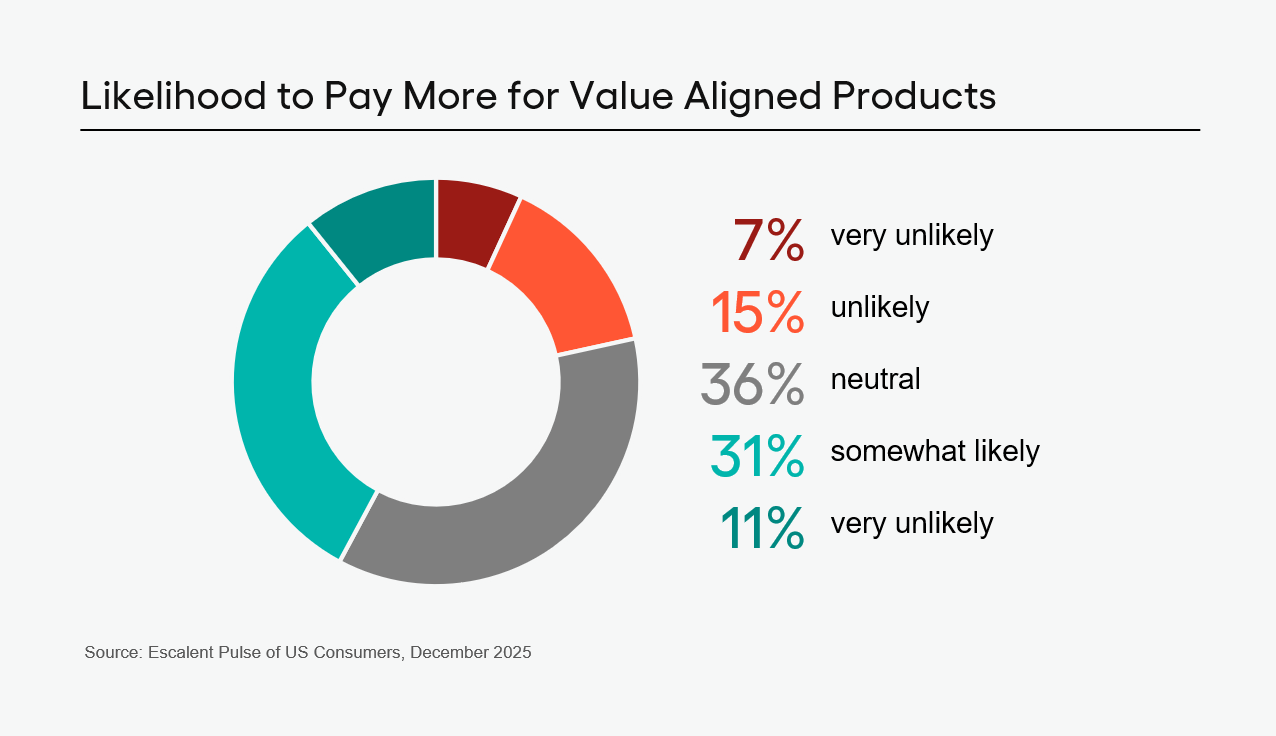
This balance between values-driven expectations and price sensitivity is defining the next era of consumer marketing. To help brands navigate this complexity, we have identified six consumer behavior trends that will define 2026, illustrated with real-world examples of how leading brands are responding to evolving customer needs.
1. How Are Consumers Seeking Comfort and Simplicity in an Uncertain World?
Global uncertainty and daily stress are driving consumers toward products that offer emotional reassurance and simplicity. According to Euromonitor, 58% of consumers report moderate to extreme daily stress, fueling demand for calming experiences and natural ingredients. Brands that deliver comfort—through product design, messaging or service—will win favor.
Example: Apple provides emotional reassurance and simplicity through reliable minimalist product design and intuitive user experiences in their open and welcoming stores, as well as making technology feel accessible and calming such as with their noise cancellation AirPods. During uncertain times, this approach helps reduce consumer stress and builds strong brand loyalty.
Key Takeaway: Comfort-driven consumption is becoming a core brand differentiator as consumers gravitate toward brands that reduce friction, provide emotional reassurance, and simplify everyday decisions.
2. Why Is Hyper-Personalization and Self-Expression Critical to 2026 Marketing?
Consumers are embracing bold self-expression and personalization. In a global consumer study by Quirks, 50% of consumers seek products that reflect their unique personalities, and 65% believe society celebrates them for being authentic.
In 2026, hyper-segmentation and personalization strategies (powered by data, AI, and behavioral insights) are no longer optional, they’re essential. According to CustomerThink, retailers are taking notice.
Example: Ferrero’s Nutella Customization Program encourages consumers to personalize jars with names or messages, creating emotional connections and reinforcing brand loyalty. This trend extends to beauty and fashion, where brands like Aesop use immersive digital.
Key Takeaway: Self-expression and personalization are now table stakes, with consumers expecting brands to reflect individual identity, preferences, and values at every touchpoint.
3. How Is Technology Redefining Wellness and Adopting High-Tech Health Solutions in Everyday Health?
Wellness in 2026 is increasingly data-driven, personalized, and technology-enabled. Consumers are demanding clinical-level, tech-enabled solutions for everyday health, from scientifically formulated beauty products to data-driven fitness tools.
Example: WHOOP provides wearable fitness trackers and subscription platforms with real-time, personalized health insights. By combining advanced sensors with actionable data, WHOOP helps users optimize sleep, recovery and overall wellness, attracting both elite athletes and everyday consumers.
Key Takeaway: Wellness is becoming clinical, connected, and data-driven, fueled by the demand for measurable outcomes, real-time insights, and technology-enabled health solutions.
4. Why Sustainability Is No Longer Optional for Brands in 2026
Sustainability has shifted from a brand differentiator to a non-negotiable consumer expectation. Carbon accounting platform Arbor has found that 72% of consumers buy more sustainably. Brands that fail to act responsibly risk losing relevance.
Examples: IKEA aims to be climate positive by 2030, using sustainable materials across its supply chain.
Patagonia encourages customers to repair products and donates 1% of sales to environmental causes.
As demonstrated by both in Sustainability Magazine, brands that integrate sustainability into their core strategy—not just marketing—build deeper trust and long-term loyalty.
Key Takeaway: Sustainability has shifted from a differentiator to an expectation, with consumers increasingly holding brands accountable for environmental impact across the full value chain.
5. How Social Commerce Is Reshaping the Future of Shopping
Social commerce is transforming how consumers discover and purchase products. By 2026, 17% of online sales will occur through social platforms, with livestream shopping projected to hit close to $70B in the U.S in 2026. Consumers expect frictionless experiences that blend entertainment and purchasing.
Example: TikTok Shop’s rapid adoption and record-breaking livestream events, like UK beauty brand P Louise generating $2M in 12 hours, illustrate how social platforms are redefining retail. Brands that fail to integrate shoppable content risk losing market share.
Key Takeaway: Social platforms are becoming primary commerce channels, reshaping how consumers discover, evaluate, and purchase products through integrated content and commerce experiences
6. Why Consumers Are Choosing Experiences Over Products in 2026
As Business Insider reports, consumers are prioritizing memorable experiences over products. Spending on experiences, from travel to dining, is growing faster than on goods.
Example: Airbnb bookings hit 491 million nights, valued at $82B, as consumers seek immersive, memorable experiences. Restaurants and hospitality brands are responding with curated dining events and experiential add-ons to capture this demand.
Key Takeaway: Experience-led value is outpacing product-led value, as consumers prioritize memorable, immersive, and emotionally engaging experiences over material goods.
What These Consumer Trends Mean for Brands and Market Researchers
For market researchers, these six trends underscore the need for agile methodologies, cultural context, and advanced analytics. To truly understand the “why” behind consumer behavior in 2026, brands must move beyond surface-level metrics.
Approaches such as ethnographic research, AI-powered analytics and insight communities enable deeper understanding of evolving motivations, unmet needs, and emotional drivers—helping brands design more relevant and resilient strategies that balance data-driven insight with human empathy.
How Brands Can Prepare for the Consumer of 2026
The year ahead promises a marketplace defined by personalization, sustainability and tech-enabled convenience. Consumers want brands that meet functional needs and align with their values and lifestyles. For businesses, this requires moving beyond reactive strategies to proactive innovation and anticipating shifts before they happen.
Next Steps for Brands:
- Audit current strategy: Ensure your brand addresses trends like eco-consciousness, wellness and social commerce.
- Invest in deeper consumer insights: Go beyond surface-level data to enable more targeted, effective decisions. Use advanced analytics, ethnographic research, and insight communities to uncover the “why” behind consumer behaviors.
- Experiment boldly: Test AI-driven personalization, immersive retail formats and other innovative experiences.
The future belongs to brands that listen, adapt and lead. Start today by engaging your customers, analyzing emerging signals, and building strategies that resonate in 2026 and beyond.
Want to learn more? Let’s connect.

Greg Mishkin
Senior Vice President, Telecom, Consumer & Retail
Greg is a senior vice president in the Consumer Goods & Retail and Telecommunications industry groups, with additional focus at the intersection of consumer and health, and is in high demand as a speaker and author in the market research and telecom fields. Greg’s responsibilities include managing and growing key client relationships while pushing the envelope on how Escalent’s methods solve complex business challenges through the thoughtful combination of multiple research approaches. He is known for turning extremely complex data into actionable insights and transforming research into competitive advantage for his clients, often by harnessing emerging methods such as AI and synthetic data to expand what’s possible in modern insights work. He currently holds multiple patents related to data-focused market research methodologies. Greg earned a master’s degree in business administration from Kennesaw State University in Kennesaw, GA; a master’s degree in clinical psychology from the University of Hartford in Hartford, CT; and a bachelor’s degree in psychology from Union College in Schenectady, NY. He lives outside Atlanta and, when not working, can usually be found playing tennis and pickleball, enjoying long walks with his wife Christine and their dog, Boots, or traveling up and down the East Coast to visit their kids and their parents.

Jeffrey T. Johnson
Jeffrey T. Johnson is a SVP in the Consumer Goods & Retail division of Escalent with 25+ years of experience leading large, complex research projects in the consumer, tech and telecom sectors. He has led many research programs with telecom and IT professionals and decision makers, gaining insights from those on the front lines and driving strategy. This experience has given him unique insights into product testing, CX and churn tracking, ad tracking, customer touchpoint satisfaction, market and flow share (which led to a co-owned methodology patent), churn, retention, onboarding, NPS, network and overall satisfaction. He has also worked as the account lead for top wireless providers and several household-name consumer and technology clients. Jeffrey is a US Army Veteran and holds a master’s and bachelor’s degree in psychology from Southern Nazarene University. He lives in Oklahoma City with his wife, Missy, and three dogs. The last of their collective eight children is a junior in high school, so empty nesting is right around the corner.