September 9, 2026

EXECUTIVE SUMMARY
Obesity care is changing fast, but the path patients follow is becoming harder to define. As GLP-1s, specialists, telehealth, digital tools and social influence reshape care, healthcare brands need to understand not just who makes decisions, but how those decisions move across the system.
To say that obesity care is having a major cultural and commercial moment is probably an understatement.
Glucagon-like peptide receptor agonists (GLP-1s) have changed the conversation with remarkable speed. Patients are more engaged, providers are paying attention, and pharmaceutical companies are moving quickly in what could become one of the largest therapeutic markets in decades.
Yet across obesity research, we see a different reality emerging beneath this momentum: Obesity care is deeply fragmented.
In studies with patients, healthcare professionals and other stakeholders, care rarely follows a single, linear path. Patients may move between primary care, endocrinologists, telehealth platforms, wellness programs, retail clinics, specialists, online support communities, AI searches and social media; sometimes using several of them at once. In many cases, patients are effectively assembling their own care journeys. Increasingly, they may be doing more than navigating the system: they may be acting as the connective tissue between parts of the obesity care system that do not naturally connect to one another.
The ecosystem is becoming even more complex, too. As GLP-1s and other incretin therapies continue showing positive benefits across obesity, diabetes, cardiovascular disease, and sleep apnea, and they are being studied across an ever-expanding range of conditions, more healthcare professionals are entering the conversation. Cardiologists, sleep specialists, gastroenterologists, OB/GYNs, orthopedic surgeons, rheumatologists, psychiatrists, neurologists, and other specialists may increasingly influence GLP-1 treatment decisions and obesity care pathways, even if they do not ultimately “own” obesity management.
At the same time, non-clinical actors (from telehealth platforms and pharmacies to payers, employers, online support communities and digital tools) may shape what patients know, what they can access and what they ultimately do.
That creates opportunities for more integrated care, but it also introduces more decision-makers, more care transitions and more potential for fragmented patient experiences.
For healthcare brands, that changes what it means to compete in obesity.
For research partners, it changes the nature of insight generation itself.
Rethinking the Obesity Patient Journey
Healthcare research often starts with the assumption that there is a patient journey we can map: awareness, diagnosis, treatment initiation, adherence and ongoing management. But fragmented obesity care challenges that model; patients may enter care through different channels, move between them, stop treatment and return somewhere else.
They may revisit the same need or decision several times, but with a different provider, different information, different health insurance coverage or a different level of readiness.
At the same time, responsibility for obesity management may be distributed across multiple healthcare professionals rather than sitting cleanly with one provider. As more specialties and channels become involved, the pathway is not simply getting longer: it is becoming less standardized.
What we’re seeing in Escalent’s own obesity work increasingly resembles a network rather than a funnel: there are recognizable moments in the care journey, but obesity patients do not necessarily encounter them in the same sequence, setting or relationship.
That distinction matters. Stops, restarts, channel switching and re-entry are not necessarily exceptions to the “real” obesity journey. Increasingly, they may be defining features of it.
The implication for obesity market research is not that journey mapping is obsolete. It is that the journey itself cannot always be assumed in advance. It needs to be discovered.
"In obesity care, the patient journey is not a straight line, rather it’s a shifting network of access points, influences and reentry moments."
Rosalie Schurman
Insights Manager, Health & Life Sciences
Healthcare Brands Are Competing Within an Ecosystem, Not a Channel
This changes the competitive game for healthcare brands in obesity.
Efficacy and safety remain fundamental, but patients now encounter a much broader ecosystem of organizations, platforms and information sources that can influence how they enter care, evaluate treatment and decide what to do next. A physician may remain the most clinically authoritative voice while being only one of several voices shaping the obesity care journey.
And influence does not necessarily equal ownership. A primary care provider (PCP) may prescribe. A specialist may create urgency. A peer may normalize treatment. Social media may raise awareness. A telehealth provider may make initiation easier. And a payer may ultimately determine what is possible.
That means healthcare brands are not competing solely at the point of prescription. Access, navigation, information and continuity can all influence the patient experience surrounding obesity treatment.
The opportunity is not necessarily to own every part of that ecosystem. It is to understand how the pieces connect, and where patients are currently being left to connect them for themselves.
In a fragmented obesity market, continuity itself may become a source of value. Brands that understand where patients lose confidence, information, access or momentum may be better positioned to support the experience around treatment: not by controlling the entire ecosystem, but by helping make care easier to navigate.
"For healthcare brands, continuity may become a competitive advantage when patients are left to connect access, information and care decisions across a fragmented obesity ecosystem."
Katarina Johnson
Senior Insights Director, Health & Life Sciences
For Healthcare Market Researchers, the Insight Must Include Care Transitions and Patient Agency
Healthcare market research has traditionally been organized around stakeholder groups: patients, primary care physicians, specialists, payers and others.
Those perspectives still matter, but we may need to change the unit of analysis. It is no longer enough to understand only the stakeholders themselves; we also need to understand what happens in the transitions between them. The transition itself may determine who influences a decision, where responsibility shifts, whether information follows the patient and where the pathway breaks down. Those moments are not side stories; increasingly, they are the pathway.
What gets carried forward from one interaction to the next? What gets lost? Who believes they are responsible for the next step? And when multiple voices are involved, whose input actually changes patient behavior or treatment decisions?
That requires a different healthcare research lens. In our obesity research at Escalent, we take seriously the need to understand where patients enter and move through the ecosystem, how roles and influence change along the way, and where traditional assumptions about ownership no longer hold. That also means separating decision authority from decision influence. The person who ultimately prescribes a therapy may not be the person (or source) that created demand, overcame hesitation or prompted the patient to act.
And we must also map the information pathway alongside the clinical one. What did the physician explain? What did another provider say? What did the patient learn from social media, peers or an AI tool? Most importantly, which of those inputs actually drove the next action? We also need to understand the role patients themselves are being asked to play. In fragmented systems, the patient may become the de facto care coordinator: carrying information across providers, reconciling conflicting advice and deciding when, where and how to re-enter care. That is not simply a logistical burden; it can shape treatment confidence, persistence and choice.
For healthcare brands, fragmentation creates a need to understand where they sit within a much larger and more fluid system.
For market researchers, it creates both an opportunity and an obligation: to design research that captures how the system actually behaves in practice, rather than forcing it into a simplified, linear journey model.
In other words, we need to study not only the nodes in the system, but the connections between them.
The key question in obesity may no longer be only what happens at each stage of the patient journey?
It’s whether there is one journey at all.
How Can Healthcare Brands Connect the Influences Shaping Obesity Care?
At Escalent, we believe understanding a complex category like obesity requires studying the system around the decision, not simply the individual stakeholders making it. Across the business, our Behavioral Science expertise helps us look beyond stated intentions to understand the forces shaping real-world decisions and behavior, while our Cultural Advisory Group brings cultural and lived-context expertise into research design, execution and interpretation.
Those capabilities become especially powerful when paired with obesity market research that traces the handoffs, information flows and shifts in influence occurring across the broader care ecosystem. Behavioral science helps us understand why decisions happen; cultural expertise helps us understand how context shapes them; and ecosystem-level research helps us see where those decisions are being made, redirected or disrupted.
In obesity, that means helping clients see the pathway as it really exists: fragmented, evolving and shaped by multiple clinical, behavioral, cultural and informational influences. By connecting those pieces rather than studying them in isolation, Escalent is helping healthcare brands identify where journeys break down, where influence is shifting, where patients are being asked to bridge gaps themselves, and where there are meaningful opportunities to create greater continuity in an increasingly complex category.
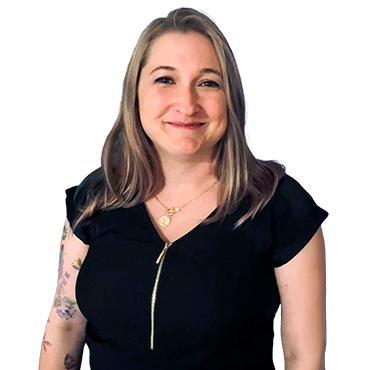
Rosalie Schurman
Insights Manager, Health & Life Sciences
Rosalie Schurman is an insights manager with Escalent’s Health & Life Sciences group. She is an anthropologist with a research focus in social justice systems and inter/intra-cultural linguistic analysis. Rosalie has a BA in Anthropology and an MA in Global and Sociocultural Studies and has worked in healthcare settings with numerous underserved populations, including at a maternity ward in the Dominican Republic, a substance abuse rehabilitation center, and chronic illness advocacy group. Since joining Escalent, Rosalie has had a focus in metabolic health and obesity. She lives in Portland, Oregon, with her dog and many houseplants.
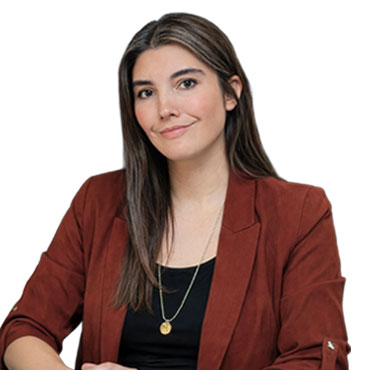
Katarina Johnson
Senior Insights Director, Health & Life Sciences
Katarina Johnson is a senior insights director on Escalent's Health & Life Sciences moderators and qualitative team. She brings nearly two decades of experience in qualitative research, with a background spanning life sciences, consumer anthropology and academic research. A Quirk’s Awards Researcher of the Year finalist, she has a particular strength in eliciting rich strategic insights through empathic interviewing, creative exercises, close observation and emerging AI-enabled approaches. Katarina is known for synthesizing complex stories into compelling deliverables, from strategic narratives to visual outputs and immersive workshops that make research findings resonate. She lives in Atlanta with her husband, two children and a lively flock of backyard chickens.