July 10, 2026

EXECUTIVE SUMMARY
Healthcare organizations can now capture more healthcare conversations than ever before, but recordings alone cannot explain recall, emotion or intent. Insight communities help pharma and healthcare brands understand the human experience behind HCP-patient interactions, revealing what truly drives decisions, behaviors and outcomes.
Healthcare organizations are sitting on more clinical conversation data than ever before, yet they’re still missing the most important insight: what those conversations actually mean to patients and providers.
From recorded consultations to AI-generated transcripts, pharma, medtech and health systems can now capture interactions in unprecedented detail. But even the most advanced tools fall short in one critical way: they fail to capture recall, emotion and intent—the human context that truly shapes outcomes.
This reflects a growing need to understand the mindset behind patient and provider dialogues and how it drives more meaningful action.
"Healthcare organizations are no longer struggling to capture conversations. The challenge is understanding what patients and providers think, feel, remember and act on before, during and after those interactions."
Barrett Ladd
Vice President, Health & Life Sciences Communities
Understanding the Human Experiences Behind Healthcare Conversations
A patient may leave an appointment having heard everything yet remember very little.
Stress, fear and information overload mean patients retain only fragments of what’s communicated. Meanwhile, recordings and transcriptions can’t reveal:
- What patients wish they had said
- What patients misunderstood or deprioritized
- How patients felt after the interaction
- Whether the healthcare provider’s (HCP) key message actually landed
On the healthcare provider side, similar disconnects exist:
- What they were thinking vs. what they shared
- What trade-offs they were balancing
- What they actually heard from the patient
Add in the variability of today’s healthcare interactions (virtual, in-person, one-time, second opinions), as well as the multiple healthcare professional interactions (with nurses, medical scribes and others), and the complexity compounds quickly.
Capturing conversations is no longer the challenge. Interpreting the human experience behind them is.
Four Ways Insight Communities Improve Patient and HCP Understanding
Insight communities offer an ongoing, in-depth and behavior-based approach to deeply understanding the patient and provider dynamic.
1. Reveal the Hidden Dynamics of HCP Roles
Healthcare providers play numerous roles in a patient’s journey, and their influence varies significantly. Through community-based qualitative and projective methods (e.g., metaphors, journaling, letter-writing), we uncover:
- Differences in patient trust across healthcare providers
- Variation in influence on treatment decisions
- Emotional nuances in each interaction across the healthcare journey
- The patient and HCP conversations that aren’t recorded
For example, in hemophilia research, patients describe distinctly different relationships with hematologists vs. nurse practitioners vs. coordinators—each shaping patient treatment decisions in unique ways.
The takeaway for healthcare brands: Patient engagement and education strategies must reflect the full healthcare provider ecosystem, not just the “primary” HCP, respecting the varying relationships accordingly.
2. Capture Real-Time, Longitudinal Experience
Healthcare journeys don’t happen in a single moment, so why measure them that way? Insight community tools allow patients and providers to log interactions as they happen, capturing:
- Real-time reflections
- Emotional context
- Evolving perceptions over time
This practice creates a living dataset that reveals how understanding, confidence and behavior shift across the healthcare journey.
The takeaway for healthcare brands: Longitudinal insight is essential to understanding patient adherence, as well as patient and provider education, influences, activation and decision-making evolution.
3. Build Knowledge Sequentially for Deeper Insight
Insight communities support multi-phase research, where research questions can evolve as insights emerge.
An example from a client with a hematologic oncology patient and provider community aimed to better understand treatment initiation among those newly diagnosed. We partnered on a three-step research project to reach their objectives:
- Phase 1: “Think, Say, Feel” survey to plot interactions during diagnosis
- Phase 2: “Then vs. Now” exploration of health literacy and activation during diagnosis and after
- Phase 3: Testing and optimizing patient materials informed from the prior phases
Each phase built on the last, moving from observation and exploration to tactical and specific takeaways.
The takeaway for healthcare brands: Sequential learning drives sharper, more actionable strategy than one-off healthcare research studies.
4. Surface the Disconnect Between Patients and HCPs
Perhaps the most powerful community application is bringing both sides into the same research ecosystem with paired patient and provider communities.
By comparing mirrored responses (“he said, she said”), communities reveal critical misalignments.
A few examples from our past research:
- In oncology, both patients and HCPs value quality of life, but providers often balance it against efficacy without fully communicating that trade-off.
- In women’s health, HCPs miss key patient concerns due to bias-driven assumptions, failing to probe for what truly matters to patients.
"The most valuable healthcare insights often emerge not from what’s unknown, but from what’s misunderstood between patients and providers."
Jessica Erley
Vice President, Global Health & Life Sciences
The takeaway for healthcare brands: The biggest opportunities often lie not in what’s unknown, but in what’s misunderstood in healthcare audiences.
Why Understanding the HCP-Patient Dynamic Matters in Healthcare
Healthcare is under increasing pressure to improve patient outcomes, drive engagement and adherence and deliver human-centered care. If your healthcare organization is relying solely on recorded interactions or retrospective surveys, you’re only seeing part of the picture. To truly understand—and influence—the HCP–patient dynamic, you need to capture the patient and HCP experience as it’s lived, not just as it’s documented. At Escalent Group, we see insight communities as the missing link between clinical reality and lived experience, helping healthcare organizations turn fragmented data into human-centered action.
Barrett Ladd
Vice President, Health & Life Sciences Communities
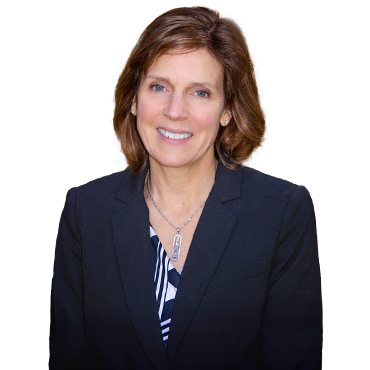
Barrett Ladd is a vice president at C Space Health, a business unit of Escalent. At C Space, she partners with leading pharmaceutical companies, medical device companies, and hospital systems to uncover HCP and patient experiences and perceptions to influence change. As a seasoned analyst, coach, and leader with decades of research experience, she loves that research and insights are built on relationships–whether with an internal team, client, or consumer–and have endless power to inform strategy and future direction. Before joining C Space in 2022, Barrett spent time client-side managing an insights team, and agency-side consulting, teaching, and researching. Barrett lives in the suburbs of Boston with her husband, three big boys, and two dogs.

Jessica Erley
Vice President, Global Health & Life Sciences
Jessica Erley is a vice president in Escalent’s Global Health & Life Sciences group, bringing over a dozen years of experience in leveraging data and insights to help pharmaceutical companies achieve their business goals. With expertise spanning a variety of analytical methodologies, therapeutic areas—including a particular focus in neuroscience—and the entire product lifecycle, Jessica is passionate about uncovering the cognitive and emotional drivers that shape human behavior. Residing in Ann Arbor, MI, with her husband and two daughters, Jessica enjoys the vibrant sports and cultural scene of a university town, along with outdoor activities. In addition to a deep professional focus, Jessica occasionally indulges in the products of an additional degree in the culinary arts.