October 26, 2026
EXECUTIVE SUMMARY
A feasible Phase 3 clinical trial protocol does not guarantee successful trial execution. Recruitment challenges, patient burden and site-level complexities can create costly delays when real-world conditions diverge from planning assumptions. By integrating patient, healthcare professional and site insights earlier in clinical development, sponsors can uncover hidden risks, refine protocols and make better-informed decisions to improve trial readiness and execution.
On paper, Phase 3 of the clinical trial looked promising. The countries had committed, the investigators were confident, the sites had forecast their patient recruitment numbers for the trial and the protocol had passed feasibility.
Then the trial began.
One site recruited successfully, another struggled to identify eligible patients. A routine procedure became an operational headache. Patients who appeared plentiful in forecasts never reached the recruiting centers. The protocol hadn’t changed, but reality had entered the equation.
And this is where critical gaps in clinical trial development emerged: a trial can be scientifically robust, operationally feasible on paper, and still struggle when confronted with the complexities of real-world healthcare. Understanding those complexities requires more than feasibility forecasts. It requires insight into how patients, healthcare professionals and healthcare systems actually behave.
The Hidden Assumptions Behind Phase 3 Clinical Trial Feasibility
Every global Phase 3 trial is built on predictions around how many patients will enroll, how quickly the sites will activate and whether or not the participants can sustain the visit schedule. But behind every set of initial assumptions lies a network of beliefs about patient pathways, clinical practices, infrastructure and human behavior. And those beliefs are becoming increasingly consequential.
An analysis of more than 16,000 clinical trials found that protocols are growing more complex. Among Phase 3 studies, a 10-point increase in the researchers’ complexity score was associated with a 35% longer overall trial duration. [1]
The problem is rarely one obviously unreasonable requirement. Another assessment strengthens the evidence. Another eligibility criterion sharpens the population. Another procedure supports an endpoint. Protocols are designed incrementally. But patients and sites experience them cumulatively. What seems manageable in isolation can become overwhelming in practice.
"Protocol complexity can build one reasonable requirement at a time. Its effect on trial duration shows why sponsors need to understand how those requirements add up for patients and sites."
Dee Eden
Group Strategy Director, Hall & Partners
Why Clinical Trial Recruitment Challenges Vary Across Sites and Countries
Consider the FORVAD Phase III surgical trial, which failed to reach its recruitment target. Researchers subsequently interviewed 18 healthcare professionals to understand why. They uncovered interconnected challenges involving patient identification, trial setup, clinical equipoise and the timing of randomization. [2]
Sites experienced these challenges differently. The most successful recruiting site had established a structured recruitment approach to identifying potential participants. Others relied on less systematic processes. The recruitment numbers revealed where the trial was struggling. Qualitative research revealed why.
Now multiply that variation across countries: a 2024 systematic review identified challenges in international clinical trials spanning staffing, training, recruitment, pharmacy operations, monitoring and biospecimen handling. [3] The same disease does not mean the same patient journey. Referral pathways, diagnostic access, specialist availability and clinical infrastructure differ substantially between healthcare systems.
The protocol remains constant, but almost everything surrounding it can change. That distinction matters enormously when determining whether a trial can recruit the right patients, at the right sites, within the required timeframe.
Why Clinical Trial Research Needs Patient and Sponsor Perspectives
Even innovations designed to improve clinical trial participation can introduce unexpected consequences. The Phase III COURAGE-ALS trial offers a revealing example.
Remote visits were generally welcomed. Among surveyed site personnel, 71% believed they helped participants remain in the trial as their disease progressed. [4]
Yet only 38% considered the hybrid design less time- or labor-intensive for sites.
Technology troubleshooting and home sample collection introduced additional operational demands for site teams. Remote respiratory assessments also achieved lower completion rates than equivalent in-clinic assessments. The same innovation looked very different depending on who was experiencing it. For patients, convenience. For coordinators, additional complexity. For sponsors, a potential trade-off between accessibility, operational burden and data completeness.
"No single stakeholder sees the whole trial. And perhaps the most valuable insights emerge precisely where their perspectives diverge."
Darja Irdam
Partner and Global Head of Healthcare Innovation, Hall & Partners
The Cost of Missing Real-World Patient and Site Insights in Clinical Trial Planning
These disconnects are not merely inconvenient. They can become expensive, time-consuming obstacles once a trial is underway. A 2024 analysis covering 950 protocols found that 76% required at least one amendment. The average period from identifying an amendment need to final oversight approval was 260 days. [5] Most amendments were considered unavoidable. No amount of research can eliminate every uncertainty.
But some operational problems are foreseeable. A procedure that conflicts with clinic workflows, an eligibility criterion that excludes patients who would otherwise be suitable, a visit schedule that becomes unsustainable for caregivers. The question is whether these problems are discovered while the protocol can still change, or after they have become barriers to trial delivery.
What If We Investigated Before We Activated? How Qualitative and Quantitative Research Can Strengthen Clinical Trial Planning
This is where healthcare market research, combining patient insights, stakeholder perspectives and qualitative and quantitative evidence, can fundamentally strengthen clinical trial planning.
Rather than simply asking whether a protocol is feasible, we can investigate what needs to be true for it to succeed in practice. At Escalent, we bring together the perspectives of patients, caregivers, investigators, site coordinators and other stakeholders across healthcare systems to uncover what traditional clinical trial feasibility assessments may miss.
Through qualitative research, we explore the hidden barriers: where patients are lost along referral pathways, how clinical decisions are made, which procedures create disproportionate burden and where protocol expectations diverge from everyday practice.
Quantitative research then helps establish how widespread these challenges are, which markets or site types are most affected and which adjustments could make the greatest difference. Together, these insights can directly inform:
- Protocol refinement
- Eligibility criteria
- Recruitment strategies
- Site selection
- Operational planning
Making these decisions before trials begin help sponsors account for patient, site and healthcare system realities. This is not about replacing scientific or operational feasibility. It is about strengthening both with something equally important: evidence of how people and healthcare systems actually behave. Because the success of a Phase 3 trial depends on whether the protocol can work for the people expected to deliver it and participate in it.
At Escalent, we help sponsors bring those realities into clinical trial development early, turning stakeholder understanding into better-informed protocol decisions and stronger foundations for trial success.
The real world will eventually test every clinical trial. The advantage lies in investigating that reality before the trial begins.
References
[1] Markey N, Howitt B, El-Mansouri I, Schwartzenberg C, Kotova O, Meier C. Clinical trials are becoming more complex: a machine learning analysis of data from over 16,000 trials. Scientific Reports. 2024;14:3514. doi:10.1038/s41598-024-53211-z.
[2] Talbot R, Higham R, Croft J, Ainsworth G, Brown S, Kelly R, Stocken D, Thomson S, Rousseau N. Rapid qualitative analysis of recruitment obstacles in the FORVAD (Posterior Cervical Foraminotomy surgery versus Anterior Cervical Discectomy surgery in the treatment of cervical brachialgia) randomised, controlled trial. Trials. 2024;25:546. doi:10.1186/s13063-024-08391-4.
[3] Gumber L, Agbeleye O, Inskip A, et al. Operational complexities in international clinical trials: a systematic review of challenges and proposed solutions. BMJ Open. 2024;14:e077132. doi:10.1136/bmjopen-2023-077132.
[4] Rudnicki SA, Gebrehiwet P, Kupfer S, Malik FI, Meng L, Simkins T, Wei J, Wolff AA, Shefner JM. Participant, site personnel and sponsor perspectives on decentralized trial features in COURAGE-ALS: a randomized clinical trial. Amyotrophic Lateral Sclerosis and Frontotemporal Degeneration. 2025;26(7–8):812–820. doi:10.1080/21678421.2025.2523941.
[5] Getz K, Smith Z, Botto E, Murphy E, Dauchy A. New Benchmarks on Protocol Amendment Practices, Trends and their Impact on Clinical Trial Performance. Therapeutic Innovation & Regulatory Science. 2024;58(3):539–548. doi:10.1007/s43441-024-00622-9.

Dee Eden
Group Strategy Director
Dee Eden is a Group Strategy Director at Hall & Partners, a business unit of Escalent, with a methodology-agnostic approach to answering client business objectives. With extensive experience across multiple therapeutic areas, Dee excels in delivering strategic clarity to complex industry challenges, supporting clients through all stages of the product lifecycle. Dee has a Ph.D. in Neuroscience, which means she has a special interest in the human brain and how people think and behave.

Darja Irdam
Partner and Global Head of Healthcare Innovation, Hall & Partners
Darja Irdam is a partner and global head of healthcare innovation at Hall & Partners, a business unit of Escalent, bringing nearly two decades of experience in healthcare research, pharmaceutical consulting and strategic advisory. She partners with pharmaceutical and biotech companies to tackle complex business challenges, translating scientific evidence, market insights and stakeholder perspectives into actionable strategies across the product lifecycle. With a background spanning academia, government health consulting and commercial research, Darja combines deep methodological expertise with a strong understanding of real-world healthcare systems, patient needs and access challenges. Her experience spans brand and portfolio strategy, evidence generation, patient and HCP research and scientific publications. She is passionate about bridging science, human behavior and commercial strategy to drive meaningful innovation and better healthcare outcomes.
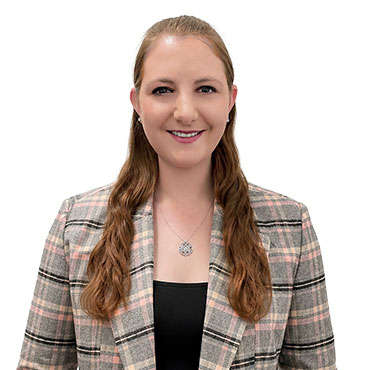
Jacqueline Alexander
Director, Clinical Lead, C Space Health
Jacqueline Alexander is a director and clinical lead at C Space Health, a business unit of Escalent. With a background in biochemistry and 10+ years of healthcare and pharma market research experience, she brings extensive therapeutic area and methodological expertise, overseeing research engagements in addition to moderating. Jacqueline lives in Philadelphia, where she enjoys exploring the city and rock climbing.