November 12, 2026

EXECUTIVE SUMMARY
In healthcare, the same symptom can be seen, understood and treated differently depending on who is experiencing it. Race and ethnicity can shape these experiences, influencing everything from diagnosis to trust in care. By centering patients’ lived experiences, healthcare market research can uncover a more complete picture of the patient journey, generating more meaningful, inclusive insights.
High-quality market research depends on understanding the full context in which people make decisions. In healthcare, that context is deeply personal. It includes how symptoms present, how seriously patients expect to be taken, and how much they feel they can trust the healthcare system, especially when the system may not have been designed with people like them in mind.
Race and ethnicity can shape all of those patient experiences.
For many patients, healthcare interactions are not neutral. Historical harms, ongoing bias, gaps in medical training and medical tools that were never adequately tested across diverse populations all impact how the patient journey can play out.
If we want stronger insights in healthcare research, we cannot treat race and ethnicity as background demographics. They are often part of the lived experience that ultimately shapes patient outcomes.
There are many ways this shows up in practice. Consider just a few examples.
Racial Disparities in Dermatology: When Symptoms Are Missed
For a patient with darker skin, something as seemingly straightforward as describing a rash can become complicated. They may know something is wrong, but the visual cues a clinician has been trained to recognize may not match how the condition appears on their skin.
Clinicians are typically trained to recognize skin conditions in light-skinned individuals, which can lead to more misdiagnoses and missed diagnoses among patients with darker skin tones. Psoriasis, for example, often presents as purple or brown plaques on darker skin. This may be missed by a physician who is only looking for pink or red plaques with silvery-white scales.¹
Skin cancer offers another example. Persistent misconceptions that darker skin is not at risk, combined with differences in how cancer presents across skin tones, can contribute to missed warning signs. In patients with darker skin, skin cancer is also more likely to develop in areas that receive little, if any, sun exposure.² As a result, people of color are often diagnosed later, resulting in worse outcomes.³
For patients, these gaps have real consequences, including repeated appointments without answers and symptoms that are minimized or missed altogether. Eventually, these shortcomings erode their trust in the healthcare system as a whole.
"When patient symptoms are missed or dismissed, the effects can reach beyond diagnosis, shaping how patients feel about seeking care and whether they trust the system to listen."
Cori Ouellette
Insights Manager, Health & Life Sciences
Medical Devices: When Tools Do Not Work Equally for Everyone
Even when providers are attentive and aware of bias, healthcare inequities can still be embedded in the medical tools they rely on.
Pulse oximeters became a prominent example during the COVID-19 pandemic, though concerns about their performance across skin tones had existed for decades. These devices determine oxygen saturation by measuring light absorption through the skin; inadequate testing on dark skin tones therefore had serious consequences. In practice, pulse oximeters tend to overestimate oxygen levels in people with darker skin, leading to delays in treatment and worse outcomes when blood oxygen levels drop for these patients.⁴
For a patient, that can mean being told they are stable when their body is signaling otherwise. And too often, it can mean a potentially deadly delay in escalation or treatment.
Temporal artery thermometers, which use infrared technology to measure temperature through the skin, present a similar problem. One study conducted by Emory University found that temporal thermometers recorded lower temperatures than oral thermometers in over a quarter of Black patients. No such discrepancy was found among the White patients they tested.⁵
These examples reveal a larger issue: even if we address the interpersonal side of healthcare inequality, it can still be baked into clinical training, diagnostic standards and medical technology. For patients, the result can be a care experience that feels inadequate despite a clinician’s best efforts.
What These Disparities Mean for Healthcare Market Research
For market researchers, these healthcare delivery issues translate into insight issues as well.
A patient who has had symptoms dismissed may respond differently to claims about support or access. A caregiver who has watched a loved one struggle to be taken seriously may bring a different level of skepticism to a new service or treatment message. A respondent who has learned to question whether medical tools work equally well for people like them may evaluate innovation through a different lens.
These perspectives are essential to understanding the full patient journey. Without a culturally informed approach to healthcare research, we risk overlooking the experiences, expectations and barriers that matter most to patients.
"To understand the patient journey fully, researchers need to consider how people’s experiences with care shape what they trust, question and expect from healthcare."
Rosalie Schurman
Insights Manager, Health & Life Sciences
How Cultural Intelligence Builds Broader Context into Research
At Escalent, we do not assume every perspective is already represented. Through the expertise of our Cultural Advisory Group—a network of specialists from across our enterprise—we bring cultural intelligence and an understanding of racial and ethnic disparities into the full research process, from study design and execution to analysis and storytelling.
That means thinking carefully about who is included, how questions are asked, what context may be missing and how findings are interpreted. It also means recognizing that inclusive healthcare research can’t just be boiled down to sample composition. It is vital to understand how identity, lived experience, healthcare history and system-level barriers all play a role in the way people engage with care.
In healthcare market research, accounting for race and ethnicity is central to understanding the full patient experience. The more fully research reflects that reality, the more useful and credible insights become.
¹ https://www.healthline.com/health/psoriasis-on-black-skin#different-types
² https://www.aad.org/public/diseases/skin-cancer/find/skin-of-color
³ https://www.skincancer.org/skin-cancer-information/skin-cancer-skin-of-color/
⁴ https://publichealth.jhu.edu/2024/pulse-oximeters-racial-bias
⁵ https://jamanetwork.com/journals/jama/fullarticle/2795901

Cori Ouellette
Insights Manager, Health & Life Sciences
Cori Ouellette is an insights manager with Escalent’s Health & Life Sciences group. She has over 15 years of experience in market research, focusing on a variety of industries, including healthcare, utilities and tech. Cori has a BA in Liberal Arts and Sciences with a concentration in Mathematics and a minor in Economics. She loves working with clients to make sure they receive valuable, actionable insights. She lives in Garner, North Carolina, with her husband and her rambunctious goofball of a cat.
Rosalie Schurman
Insights Manager, Health & Life Sciences
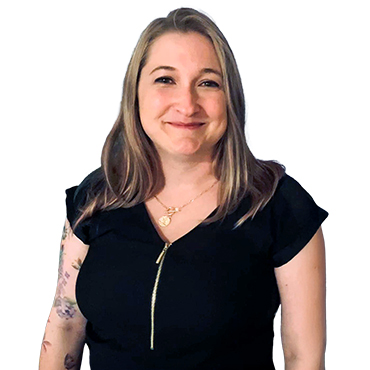
Rosalie Schurman is an insights manager with Escalent’s Health & Life Sciences group. She is an anthropologist with a research focus in social justice systems and inter/intra-cultural linguistic analysis. Rosalie has a BA in Anthropology and an MA in Global and Sociocultural Studies and has worked in healthcare settings with numerous underserved populations, including at a maternity ward in the Dominican Republic, a substance abuse rehabilitation center, and chronic illness advocacy group. Since joining Escalent, Rosalie has had a focus in metabolic health and obesity. She lives in Portland, Oregon, with her dog and many houseplants.