October 30, 2026

EXECUTIVE SUMMARY
AI can make business wargaming faster, cheaper and easier to repeat, but the real value comes when leadership teams use AI-enabled competitive intelligence to challenge assumptions, pressure-test competitor moves and make sharper strategic decisions.
Most companies that tried business wargaming quietly stopped doing it. And honestly? They were right to stop, at least the way they were doing it. But giving up on the idea entirely may be one of the most expensive strategic mistakes a leadership team can make.
Business wargaming is one of those tools that sounds brilliant in theory, gets championed by strategy consultants, then slowly disappears from the corporate calendar. The reasons are always the same: it takes too long, costs too much and nobody quite believes the competitive insights justify the two days spent in a conference room pretending to be a competitor.
Now, AI has changed the economics of competitive strategy planning overnight. What once cost $50,000–$100,000 and took months of preparation can theoretically be done on a laptop, in an afternoon, for free. So, the obvious conclusion is: problem solved. AI-enabled business wargaming is back, cheaper, faster, better than ever. Right?
Not quite. Because in the rush to embrace the shortcut, most companies are about to miss the whole point of what made wargaming powerful in the first place and makes it useful: leaders testing their assumptions and working through what they should do together.
What Is Business Wargaming and How Does It Help Teams Stress-Test Their Competitive Strategy?
At its core, business wargaming is a structured simulation in which teams role-play as different competitive players: your own company, key rivals, customers, even regulators to stress-test business strategy and anticipate how the market will respond to your moves.
Think of it as a rehearsal for competitive reality. Not a prediction, but a pressure test. A way of asking, “how will competitors respond to our strategy, and what assumptions could leave us exposed?” before the market answers that question for you, expensively and irreversibly.
The Old Way: Powerful in Theory, Painful in Practice
For decades, business wargaming was the domain of large corporations and top-tier strategy consultancies. The traditional wargaming format was well-established: assemble four or five teams, build detailed competitor briefing books, potentially bring in external facilitators, book an offsite venue and block out two days of senior leadership time. Done well, it was genuinely valuable.
But the costs were high. A traditional competitive wargame like the one described above could run between $50,000 and $100,000. Preparation alone could take eight to ten weeks. For most mid-sized companies, and even for large ones, that price tag and timeline put it firmly in the “nice to have” category: perennially on the strategic planning agenda, rarely on the calendar.
Research among competitive intelligence professionals confirms the pattern: most organizations that do wargames at all do so less than once a year, nowhere near frequently enough to keep pace with how fast competitive landscapes shift today.
But the deeper problem wasn’t just cost. It was frequency. Given the time and investment involved, a business wargaming exercise might happen once every few years, and that kind of frequency doesn’t build competitive readiness. Markets move faster than that. The traditional wargaming format was simply too heavy and too slow to keep pace.
Something had to change.
"Traditional business wargaming did not fail because the method lacked value. It failed because companies could not run it often enough to keep pace with competitive change."
The AI Shortcut: Could Generative AI Replace Traditional Business Wargaming?
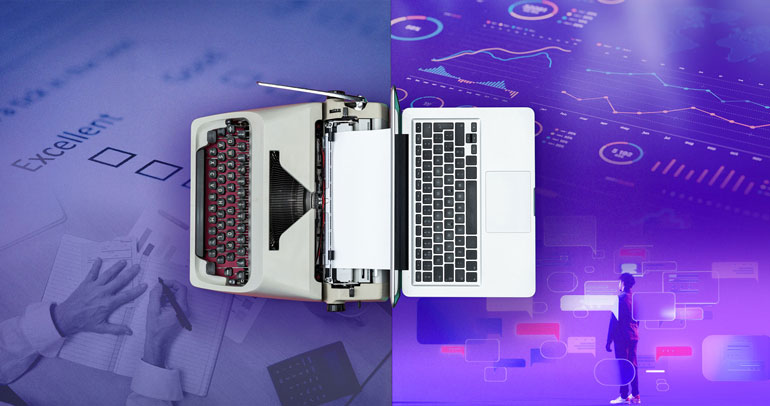
Then came generative AI. And suddenly, the most expensive parts of a traditional wargame looked like they could be solved with a laptop and an afternoon.
Think about it: in theory you can feed an AI tool everything that is publicly available about a competitor, from public filings, pricing history, product roadmaps, leadership statements and past strategic moves, and ask it to simulate competitor behavior or role-play as that competitor. It won’t get tired, it won’t break character, and it won’t unconsciously revert to thinking like your own company (like some employees in a wargame might do). Run multiple rounds, test different scenarios, model competitor responses and stress-test your assumptions. All in a fraction of the time. All at a fraction of the cost.
The conclusion seems obvious: why rent a conference room and pull your leadership team off their day jobs for two days when you can simulate the whole thing on your laptop before lunch?
It’s a genuinely attractive proposition. And it’s not entirely wrong. AI absolutely has a role to play in making business wargaming faster, cheaper and more accessible. But as a complete replacement for the traditional exercise? That’s where the logic starts to break down. AI can help you explore what a competitor might do. Your leadership team still has to decide what those possibilities mean for your business.
Why You Still Need the Room for Human-Led Strategic Decision-Making
Here’s the problem with the laptop-only wargaming approach: it optimizes for the wrong output.
The goal of a wargame was never just to produce a report on how competitors might respond. It was to change how your team thinks, together, in real time, under pressure. And that transformation simply cannot happen on a screen that only one person is looking at.
When a senior executive has to stand up and argue the competitor’s case against their own company’s strategy, something happens that no AI simulation can replicate. They feel the discomfort. They hear their colleagues react. They might realize mid-argument that the competitor’s position is stronger than they had assumed. That is a visceral, memorable experience, and crucially, it is a shared one. It changes not just how one person thinks, but how the team thinks together.
This is especially true for the core purpose of wargaming: challenging internal assumptions. Assumptions don’t get overturned by reading a document. They get overturned when a colleague you respect says “hang on, playing this competitor’s role made me realize we’ve been wrong about this.” That moment of shared doubt, voiced openly in front of the leadership team, is what actually creates permission to change direction.
An AI can surface a blind spot. But it takes a room full of people to sit with the discomfort of it and agree to act.
So the laptop-only wargame produces an insight. The team exercise produces a decision.
"AI can identify a strategic blind spot, but leadership teams still need to wrestle with its implications together before it becomes a decision they are willing to act on."
How to Win at Wargaming in the AI Era
The good news is that AI doesn’t kill wargaming. It rescues it.
The traditional format failed not because the idea was wrong, but because the overhead was too high. AI removes exactly that overhead, cutting the time and cost of the parts that were always preparation, never insight. The result is a leaner, sharper exercise that lets your team focus their energy where it actually matters: the human debate that changes minds and drives decisions.
Here’s what great AI-powered wargaming looks like in practice:
1. Use AI to do the heavy lifting before the room convenes. Competitor briefing books that once took weeks to compile can now be assembled in days or hours. AI can synthesize public filings, news, job postings, earnings calls and leadership interviews into a rich, structured portrait of how each competitor thinks and behaves. Of course, any AI-generated intelligence still needs to be overseen, guided and quality-checked by an experienced human. Treat that profile as a starting point for discussion, not the answer. Someone with competitive intelligence experience should check the sources, add context and challenge the conclusions. AI is fast and comprehensive, but it can miss what isn’t easily findable, overstate confidence, and occasionally produce a convincing narrative that doesn’t hold up to scrutiny. For a deeper look at how to use AI effectively across the CI process, see our related blog post.
2. Keep the exercise human. The simulation itself, the role-playing, the moves and countermoves and the heated debates, still needs to happen in a room that brings the real decision-makers together. That is where assumptions get challenged, blind spots get named, and the team develops the shared instinct to act differently. Don’t shortcut this part by letting a shared strategy exercise turn the wargame into a solo AI exercise.
3. Make it shorter and more frequent. With AI handling preparation, there is no reason a wargame needs to consume two days and $100,000. A well-prepared half-day session with the right people can deliver the same cognitive shift and can be repeated quarterly rather than once every few years. Frequency is what builds competitive muscle.
4. Start with a clear question. AI or no AI, a wargame without a sharp central question produces interesting conversations and little else. What decision are you trying to make? What assumption are you trying to test? Anchor the exercise to something specific and actionable. Think of a pricing move, product launch, market entry or competitor threat.
5. Close with decisions, not a deck. The most common way wargames fail is not in the room, it’s afterwards, when the insights sit in a slide deck that nobody acts on. Before the session ends, agree on what changes as a result. Even one concrete decision is worth more than fifty pages of findings.
Wargaming was never broken. It was just too expensive and too slow for most companies to do properly. AI has removed both of those excuses. But the companies that will win are not the ones that use AI to skip the hard part, they are the ones that use it to make the hard part more evidence-led and easier to repeat.
At Escalent, we see the opportunity in combining AI-enabled competitive intelligence with human-led strategy facilitation: faster preparation, sharper scenarios and better decisions in the room. Get your team in the room. Keep the exercise human. Challenge your assumptions. And make a decision before you leave.
If you’d like to explore how Escalent can help you design and run a smarter, AI-enabled wargaming exercise, from competitive intelligence to facilitation, we’d love to talk.

Silvia Springolo
Senior Vice President, Escalent Europe
Silvia is a Monitor/Deloitte veteran, with 20+ years of expertise in insights, consulting and marketing. She has helped dozens of senior execs at Fortune 500 companies solve strategic challenges through insight. Her passion is helping companies grow and move their brands forward, whether by testing new products, discovering new consumer segments, repositioning brands or validating value propositions. She is one of Escalent’s experts in competitive intelligence and wargaming, helping clients stay ahead of competition and win in the market. Her experience spans industries, but her focus is decidedly consumer-first. Silvia is now based in Italy, but spent most of her professional life in Boston. A graduate of Boston University’s MBA program, she is also a certified yoga instructor, a fervent traveler and an intrepid mountain climber.